3D Character Generation: Single Image vs Four-View Turnaround
We tested three image-to-3D models, compared their geometry and character likeness, then rigged and animated the results to see which held up.
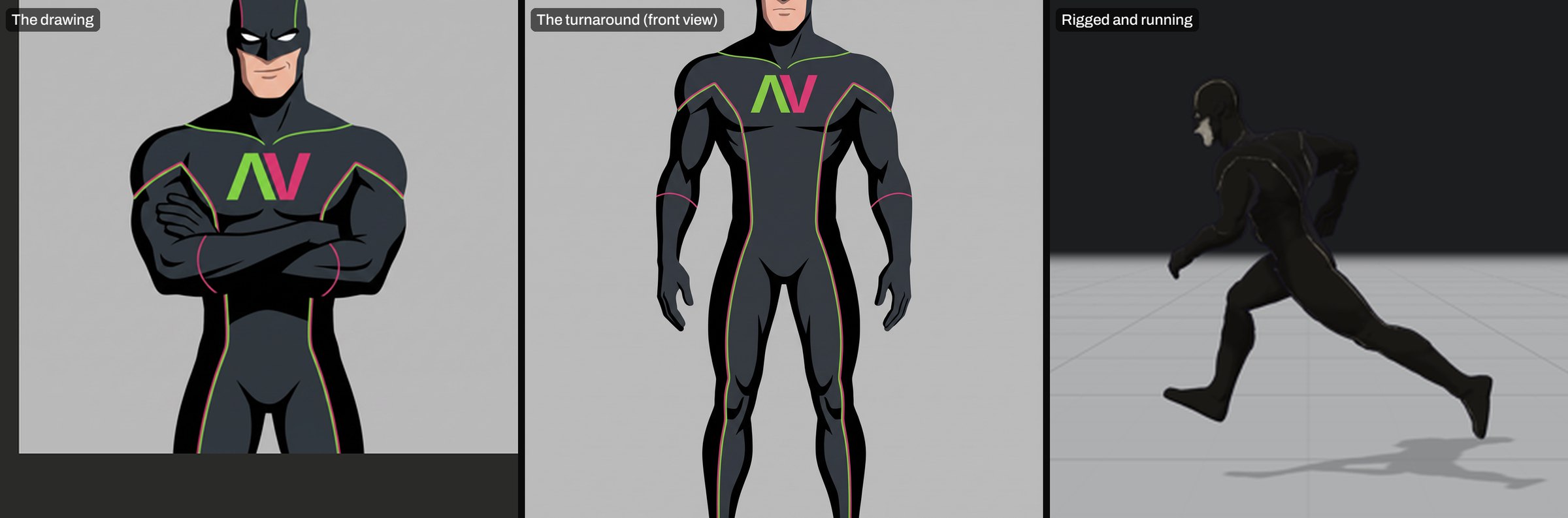
The test
We used the same illustrated character, the Loraverse Man, to test three image-to-3D models with two inputs each:
- Single image: the original illustration, cropped at the thighs with the arms crossed.
- Four-view turnaround: front, back, left and right views of the full body in a neutral A-pose, generated from the illustration with Gemini 3 Pro Image through Loraverse.
The models were Hyper3D Rodin v2.5, Tencent Hunyuan 3D v3.1 Pro and Meshy 7.1, one run per model per input. Rodin and Hunyuan meshes were rigged with Meshy Rigging; Meshy rigs in the same call. A fourth model, Tripo H3.1, failed three times on the turnaround and was not retried. Likeness and deformation were judged by eye on the Stage bench.
The illustration and the turnaround differ in both coverage and pose, so this compares two input workflows rather than isolating the effect of view count alone.
Test 1 · Single-image reconstruction
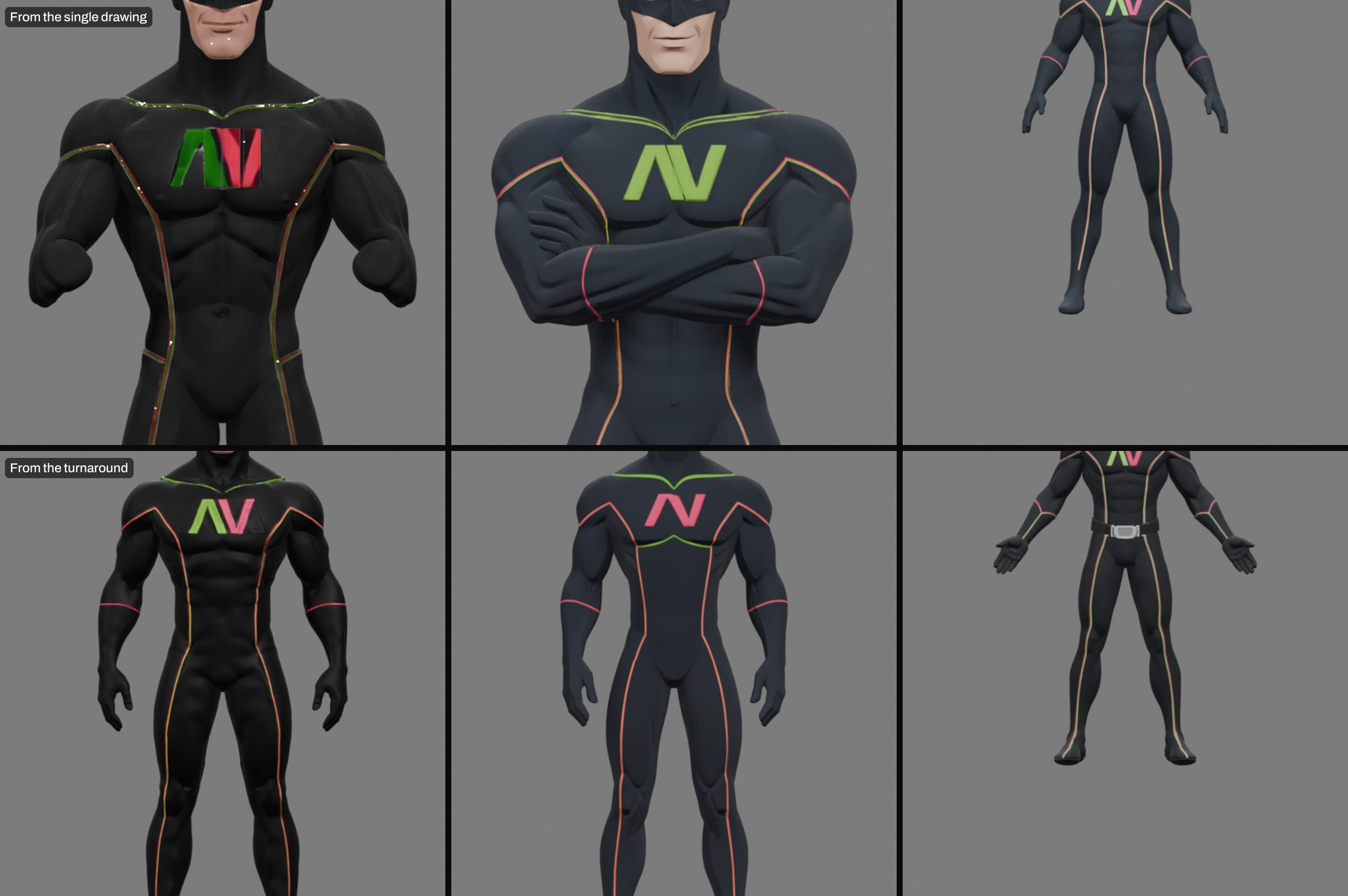
Rodin and Hunyuan reproduced the illustration closely but stopped at the thigh, with the crossed arms fused to the torso. Neither could be rigged. Meshy produced a full standing figure by inventing the lower body, and lost the likeness doing it.
Finding: the cropped illustration did not carry enough information for a complete, faithful character that could be rigged.
Test 2 · Four-view reconstruction
The turnaround improved all three results. Rodin and Hunyuan produced complete standing characters with the costume piping, the chest emblem and the proportions intact. Meshy produced a complete figure but added a belt and back markings absent from the references. All three meshes auto-rigged.
Finding: the full-body turnaround produced complete, riggable characters, with some visual drift on one model.
Test 3 · Animation and deformation
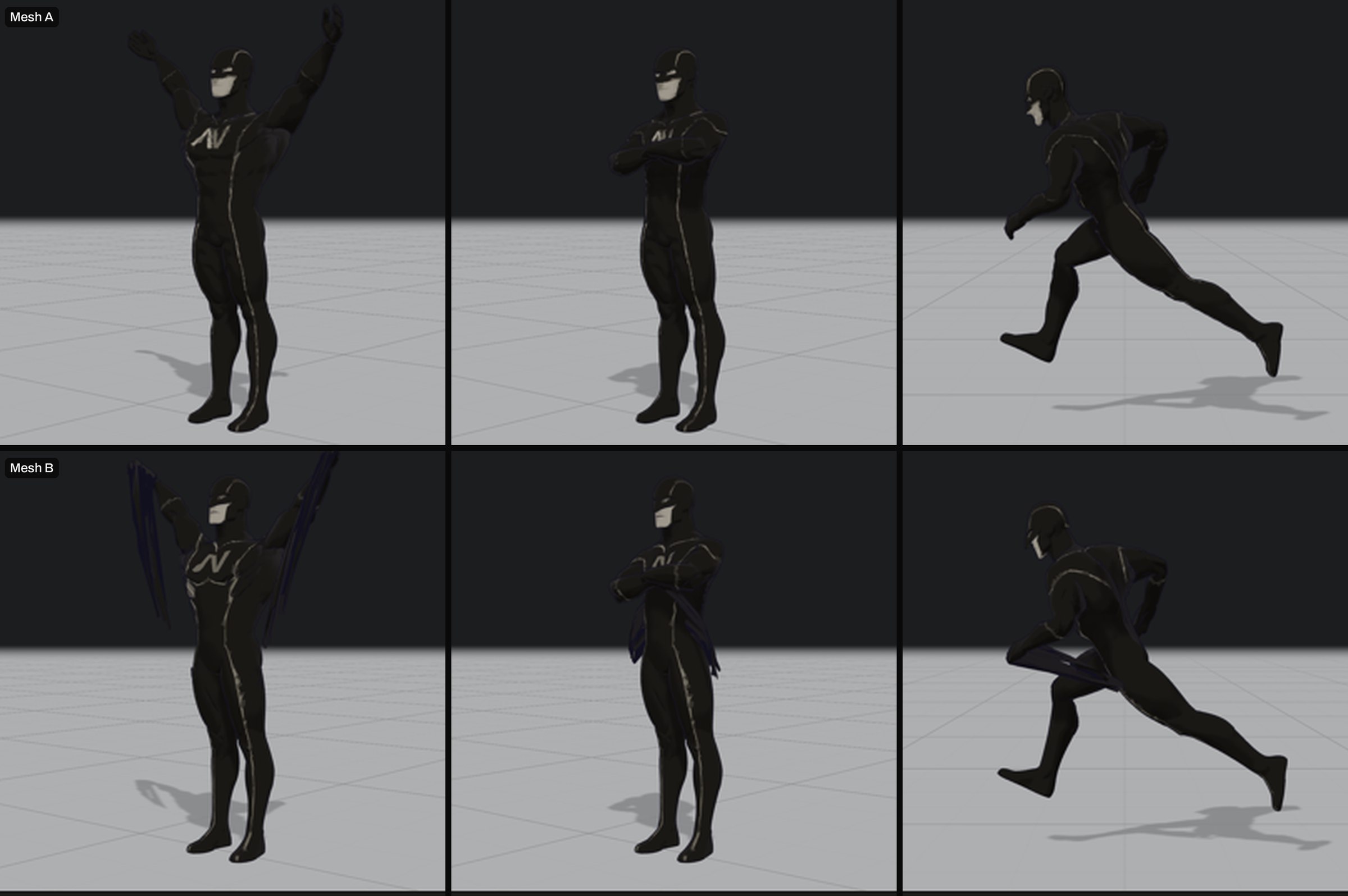
We put the three rigged characters through five movements: arms raised, arms crossed, seated, walking and running. Rodin and Meshy handled all five without visible deformation. Hunyuan developed geometry artifacts: the mesh stretched between the arms and torso in the raised-arm and crossed-arm poses, at the hands when seated, and between the legs in the run. Standing still, these defects were far less apparent.
Finding: a successful rig does not guarantee animation-ready geometry. Deformation testing is needed before an asset is approved.
What we learned
For a character meant to animate, a complete turnaround in a neutral pose was the more reliable starting point in this test. Three of three turnaround meshes rigged; two of three passed the five movement tests cleanly. None of the auto-rigs carried finger bones, so hands are mitts on every mesh.
Our recommended workflow: prepare full-body references, generate the mesh, auto-rig it, and test deformation across several poses before using it in production. A convincing static mesh is not evidence of animation readiness.
| Model | Single image | Turnaround | Rig | Five movements |
|---|---|---|---|---|
| Rodin v2.5 | Bust, arms fused, not riggable | Complete, best likeness50k triangles | Meshy Rigging | Clean |
| Hunyuan 3D v3.1 Pro | Bust, arms fused, not riggable | Complete, likeness kept60k triangles | Meshy Rigging | Tears in four of five |
| Meshy 7.1 | Invented legs, likeness lost | Complete, belt and back markings added31k triangles | Built in | Clean |
One run per model per input, 6 October 2026. Tripo H3.1 is not in the table: its turnaround runs errored three times and its single-image result was unusable.