Seedance 2.5: Testing cut timing in 30-second videos
We generated ten takes from six staged scenes. Of 44 planned cuts, 43 landed within one frame. Visual accuracy remained a separate challenge.
The test
We staged six 30-second dialogue scenes in Loraverse Stage, setting each shot’s framing, order and duration before generation. For each scene we built a timed reference animatic carrying the planned shot changes, as a depth video with pose data, and gave it to Seedance 2.5 to generate one 30-second video with all the shots, at 480p and 24 frames a second. Takes with a visual fault were generated again.
We then compared the planned cut points with the cuts a scene-change detector found in each generated take, across ten takes.
The result: 43 of 44 cuts matched
Across the ten takes, 43 of the 44 planned cuts were detected within one frame of their planned positions, and no take contained an unplanned cut. The one cut not detected, at 13 s in the Frontier Wall scene, joins two dusk frames too similar for the detector; the change is visible to the eye.
Example: the saloon
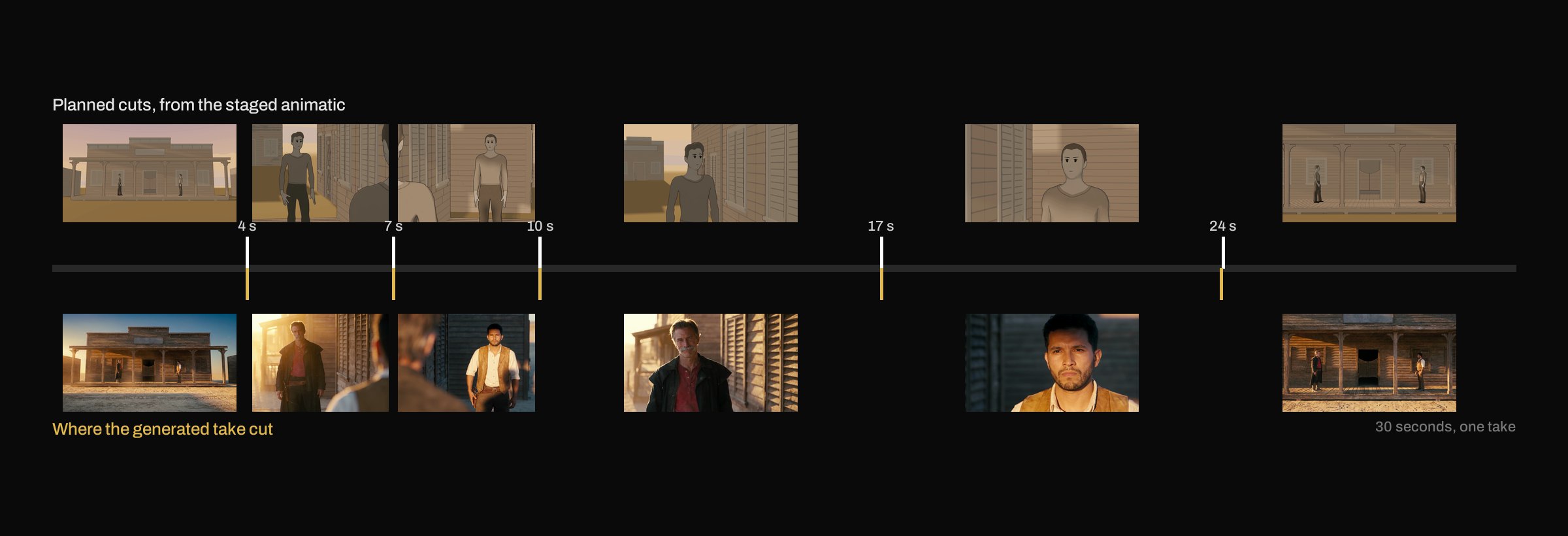
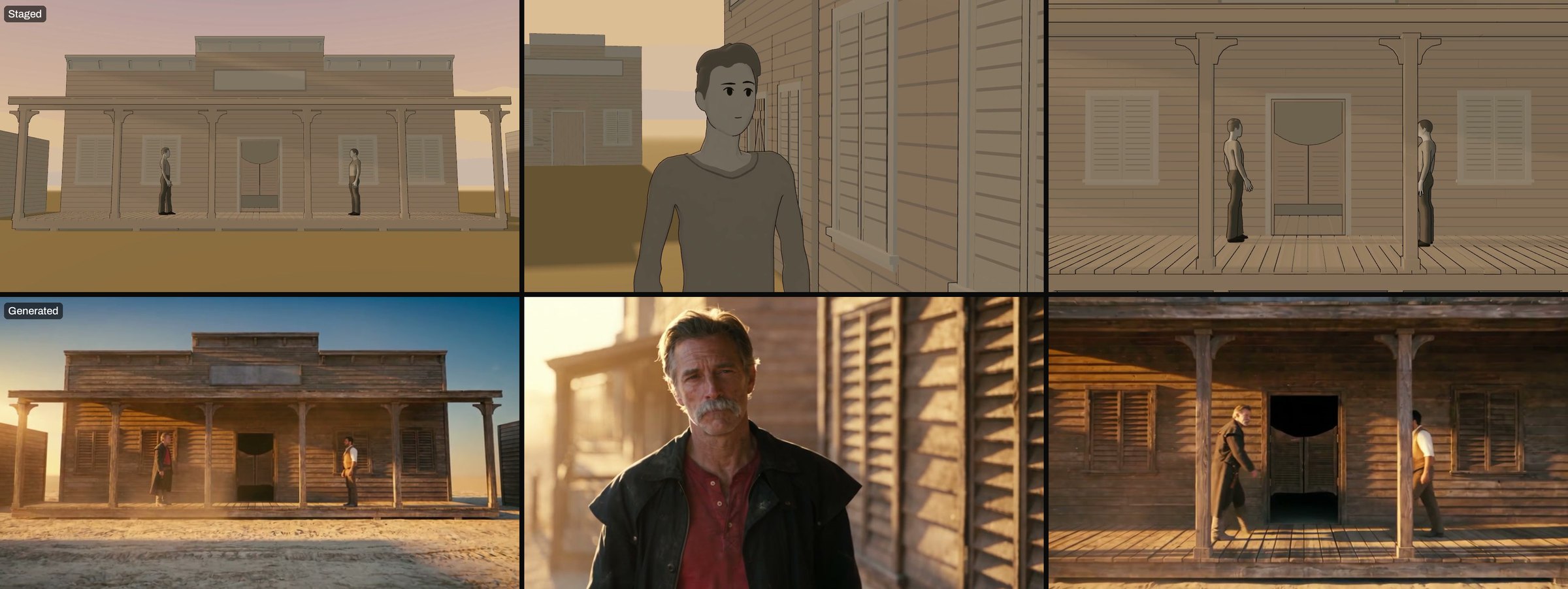
The saloon scene has six shots, with five planned cuts at 4, 7, 10, 17 and 24 seconds. In the first take, four cuts landed on their planned frame and the fifth came one frame early. In the delivered second take, two were exact and three came one frame early. The shot order was unchanged in both.
Finding: Seedance preserved the planned shot sequence and timing while interpreting the visual content.
What still required retakes
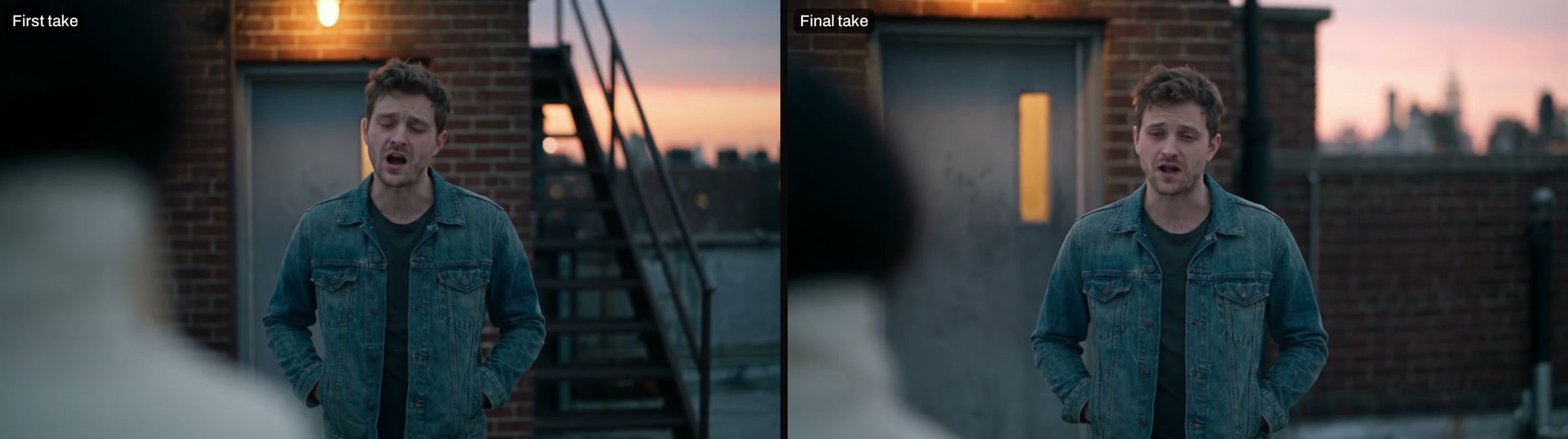
Three of the six scenes were usable on their first take. The other three needed more takes for a location or an object: a staircase the brief forbids, a stream in a dry riverbed, and timbers that read as hitching posts. Other differences were tighter framing than staged, warmer light, and a character reading older than written.
The rooftop comparison shows the distinction: the picture changed between the first and final takes while the cut positions did not.
Finding: accurate cut timing did not guarantee accurate framing, environment details or character appearance.
What this means for production
Seedance reproduced almost every planned cut within one frame when the edit was supplied as a reference animatic, so pre-timed references are a promising way to generate multishot sequences without rebuilding the edit afterwards. Shot content still needs review: framing, props, locations and continuity can drift while the cuts stay correctly timed.
Limitations
The reference animatics already carried the planned cuts. We did not compare against generations without a video reference, or test whether Seedance can derive an edit from a script alone, and we did not measure character blocking or spatial accuracy within shots. These results describe edit-timing adherence under the tested conditions, not frame-accurate performance in general.