MiniMax H3 vs Seedance 2.5: Testing 3D-guided video generation
Three staged camera moves, two video models. We compare visual quality, motion adherence and generation cost.
The test
We staged three shots in Loraverse Stage before generating any video:
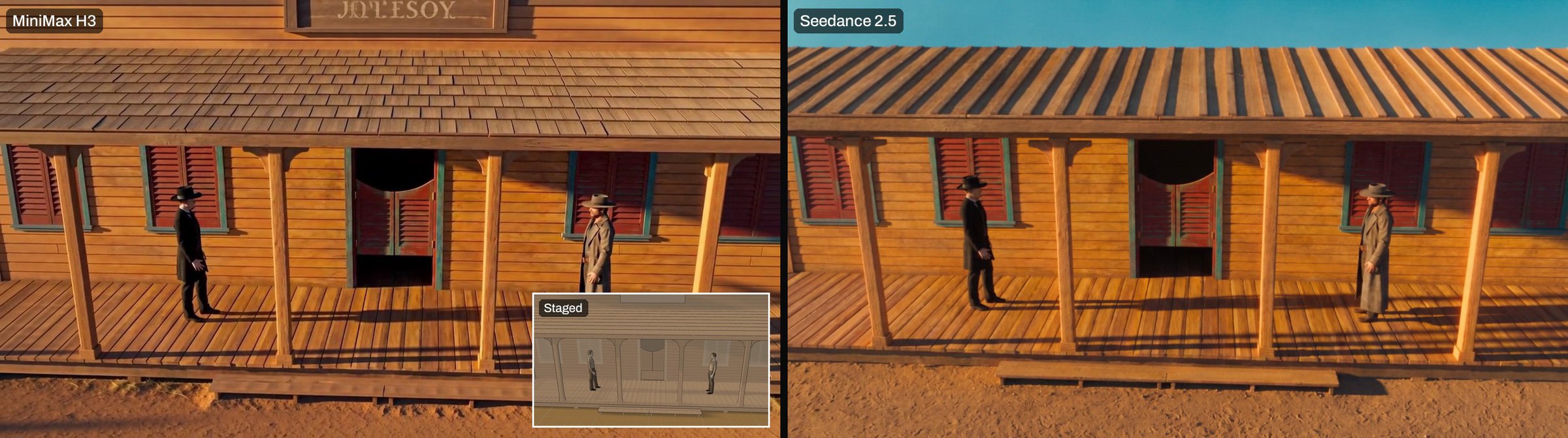
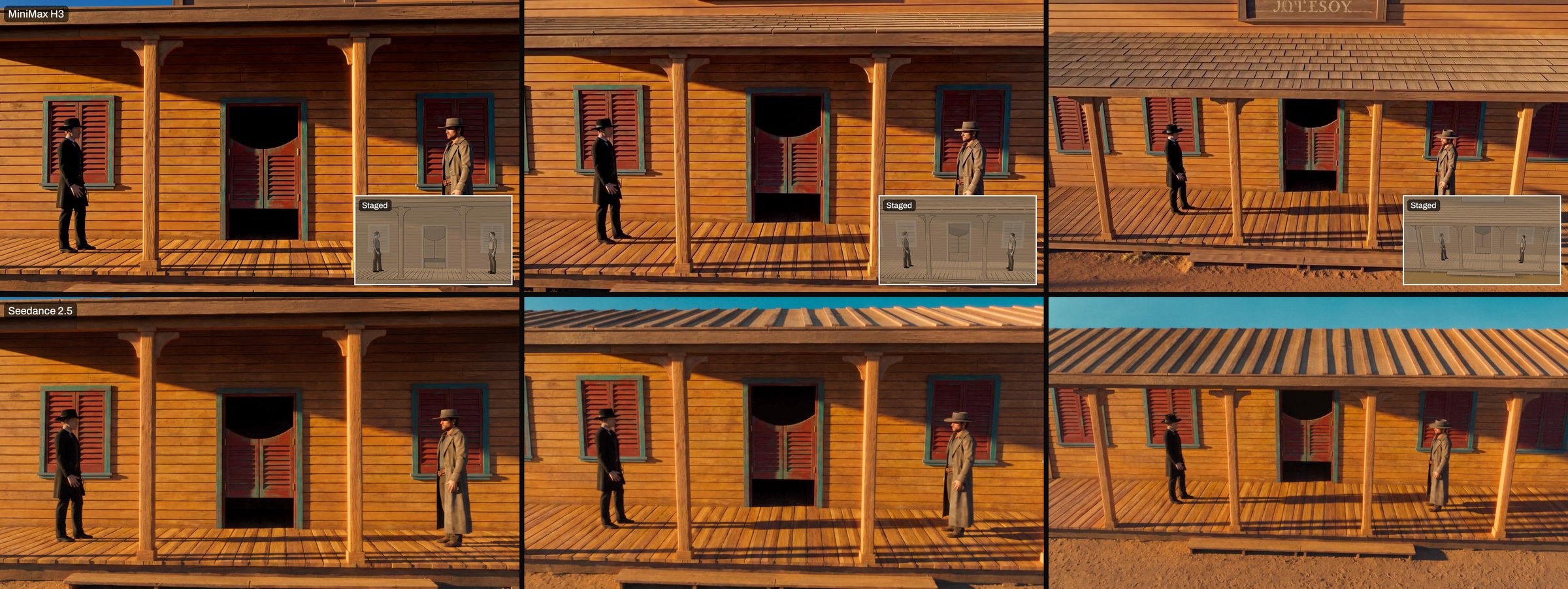
- Crane: a camera rising up and back outside a western saloon.
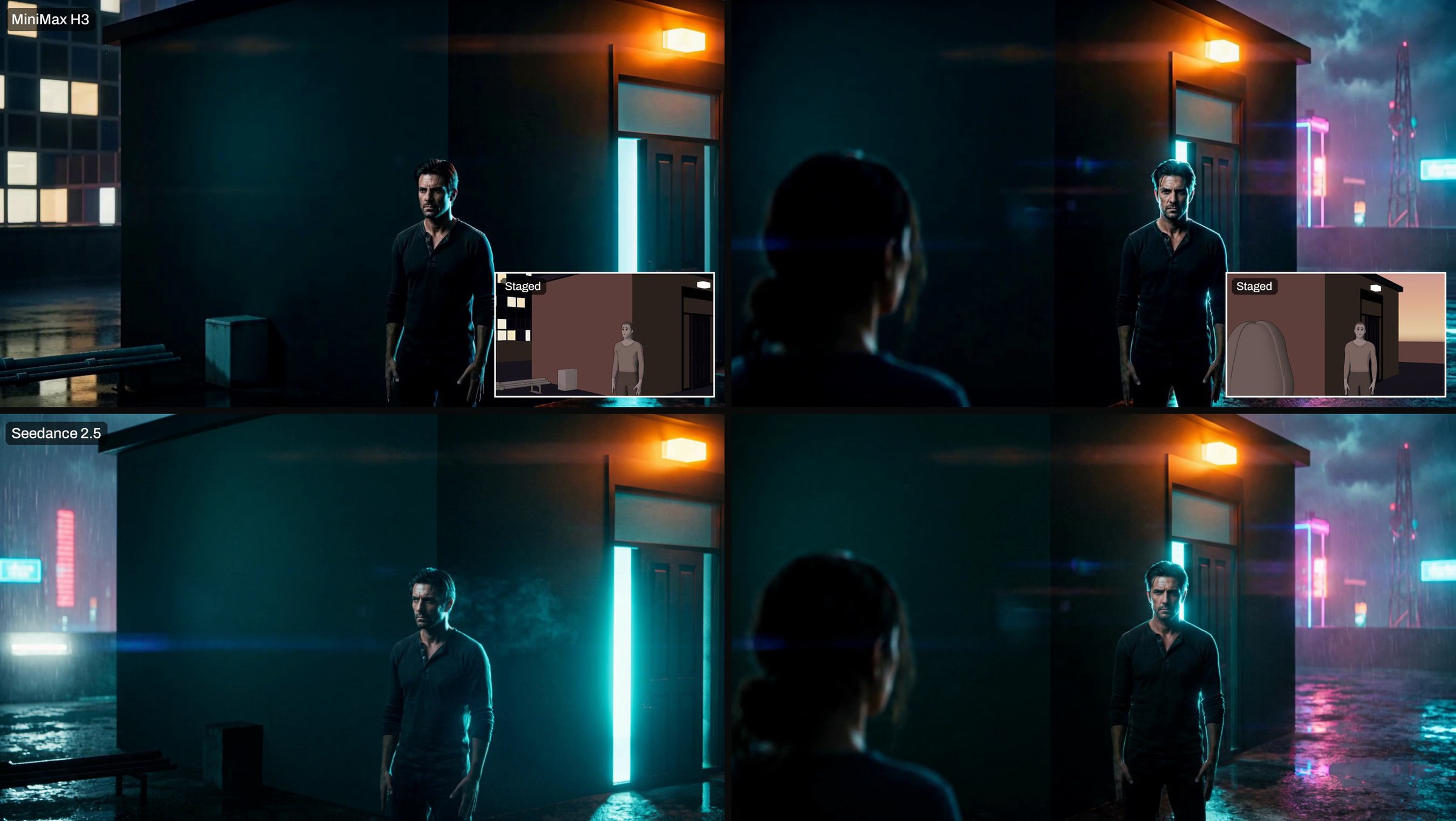
- Orbit: a 20-degree arc around two characters on a rooftop.
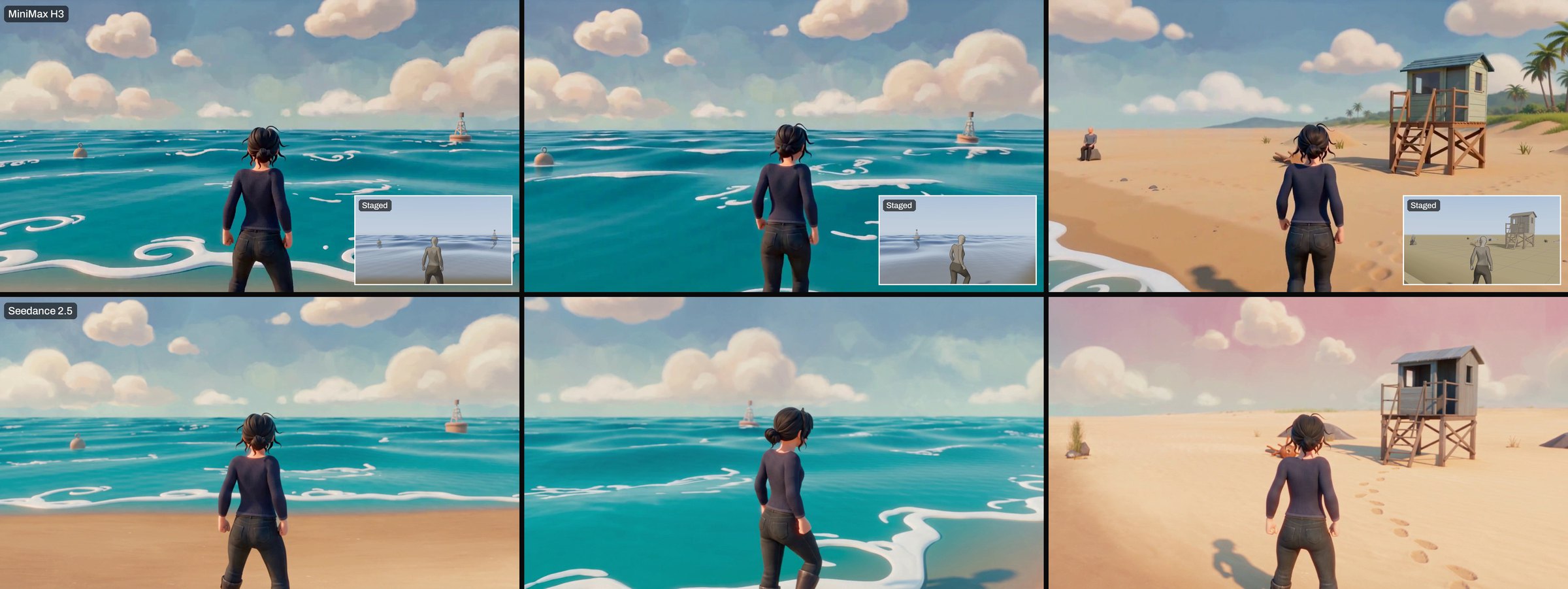
- Follow: a camera tracking a woman walking along a beach to a lifeguard hut.
Both models received the same staged shots, cast and look reference, but different control inputs. Seedance 2.5 received a depth video with pose data. MiniMax H3 received the rendered blockout through its 3D-to-video route. We generated one result per shot per model, at 720p on Seedance and 768p on MiniMax, with no rerolls.
Test 1 · Crane: both preserve the camera move
Both models reproduced the rising move and ended at the staged height, with the two figures where we placed them. The differences were in the environment. MiniMax added a hanging sign with illegible lettering. Seedance changed the roof structure and exposed more sky.
Finding: camera movement and subject placement held on both. Neither model treated the staged environment as fixed.
Test 2 · Orbit: same blocking, different pictures
Both models completed the rooftop arc and ended on a similar composition, with the man’s head landing on the same spot of the door frame. The differences were visual. MiniMax produced a darker treatment. Seedance leaned into neon lighting, wet surfaces and haze.
Finding: both preserved the planned composition and read the same look reference differently.
Test 3 · Follow: Seedance holds closer to the planned movement
The beach tracking shot showed the clearest difference in control adherence. Both models followed the walking character to the lifeguard hut. MiniMax extended the camera travel to about 1.4 times the staged distance, measured against the blockout, and added surf and figures of its own. Seedance stayed closer to the planned pacing and distance.
Finding: Seedance adhered better to the intended tracking movement in this test.
Which model would we choose?
MiniMax H3 is our overall preference for these tests, on its visual results and its lower generation cost. Seedance 2.5 did better where adherence to the planned tracking movement mattered most. Both models benefited from a staged starting point, but neither treated the blockout as a strict constraint on the generated environment.
| Criterion | MiniMax H3 | Seedance 2.5 |
|---|---|---|
| Visual quality | Our preference | Strong alternative |
| Crane adherence | Good | Good |
| Orbit adherence | Good | Good |
| Follow adherence | Overshoots planned travel | Closer to planned movement |
| Cost per take | 10 to 12 credits5 to 6 s · 768p · $1.00 to $1.20 | 39 to 47 credits5 to 6 s · 720p · $3.90 to $4.70 |
| Best suited for | Visual quality and value | Motion adherence |
Credits are Loraverse list prices for a take of the same length and resolution, at 10 cents a credit; member plans pay less. The three MiniMax takes come to 34 credits, the three Seedance takes to 133.
These findings cover three shots and one generation per model per shot. Because the control inputs differed, this is a comparison of two practical production workflows, not an isolated benchmark of the models.